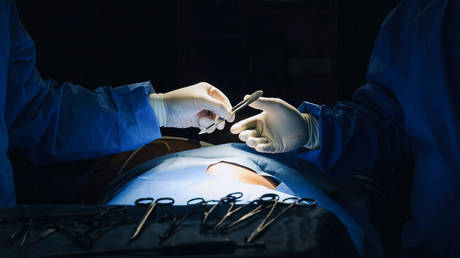
In March 2000, a 40-year-old multiparous woman in an isolated rural region of Mexico successfully performed a self-inflicted Cesarean section using a non-sterile kitchen knife after 12 hours of obstructed labor. Both the mother and the neonate survived. While popular media accounts treat this event as a miraculous feat of maternal instinct, a clinical and mechanical analysis reveals that survival was dictated by a highly specific convergence of maternal anatomy, physiological adaptations during advanced labor, and precise mechanical vectors.
Evaluating this event through the lens of surgical physics and pathology strips away the sensationalism to understand how a human body bypassed the standard lethality thresholds of massive hemorrhage, visceral perforation, and acute sepsis.
The Three Pillars of Surgical Viability in Non-Controlled Environments
To understand how a self-inflicted abdominal delivery did not result in immediate maternal mortality, the event must be deconstructed into three distinct physiological systems: vascular mitigation, mechanical accessibility, and localized immunological defenses.
       [Extended Obstructed Labor (12+ Hours)]
                          │
                          ▼
            [Myometrial Exhaustion / Ischemia]
                          │
       ┌──────────────────┴──────────────────┐
       ▼                                     ▼
[Compression of Uterine Arteries]   [Thinning of Lower Uterine Segment]
       │                                     │
       ▼                                     ▼
[Reduced Incisional Hemorrhage]     [Decreased Resistance to Incision]
1. The Vascular Mitigation Framework
The primary vector of mortality in any un-clamped laparotomy or hysterotomy is exsanguination. The uterine artery and its branches deliver approximately 600 to 700 mL of blood per minute to the term uterus. Under standard physiological conditions, a transection of these vessels yields fatal blood loss within minutes.
Two distinct mechanisms mitigated this risk during the 12 hours of obstructed labor:
- Myometrial Exhaustion and Tonic Ischemia: Prolonged labor induces a state of continuous or highly frequent uterine contractions. This sustained muscular hypertonicity compresses the intramyometrial vascular network, mechanically restricting blood flow. The uterus effectively created an internal tourniquet before the first incision was made.
- Maternal Hypovolemic Compensation: As localized dehydration and exhaustion progressed over 12 hours, peripheral vasoconstriction shunted blood volume toward central vital organs, reducing the perfusion pressure in the anterior abdominal wall and the anterior uterine wall.
2. Mechanical Accessibility and Anatomical Variations
The success of a blind vertical incision depends entirely on avoiding the highly vascularized lateral zones of the abdomen and uterus. The subject executed a low-line vertical laparotomy, approximately 17 centimeters in length, along the linea alba.
The linea alba is an avascular fibrous structure formed by the fusion of the aponeuroses of the abdominal muscles. By utilizing this precise midline path, the incision bypassed the rectus abdominis muscle bellies, avoiding the inferior epigastric arteries.
Furthermore, multiparity—this being the subject's eighth pregnancy—exerts a structural toll on the abdominal architecture. Repeated gestations induce rectus diastasis, which is the lateral separation of the abdominal muscles. This structural separation thinned the intervening tissue layers, minimizing the depth of incision required to breach the peritoneal cavity and reducing the surface area of damaged tissue.
3. The Structural Mechanics of the Lower Uterine Segment
A critical divergence occurs between standard surgical practice and this anomalous event regarding the location of the hysterotomy. Modern Cesarean sections utilize a transverse incision in the lower uterine segment (the Pfannenstiel-Kerr technique). The subject utilized a vertical incision.
During advanced labor, the uterus differentiates into two distinct zones: a thick, active upper segment that contracts to expel the fetus, and a thin, passive lower segment that stretches and thins. Because labor was obstructed for half a day, the lower uterine segment had stretched to an extreme degree, rendering the muscular wall exceptionally thin. This thinning yielded two structural advantages:
- Reduced Tissue Resistance: The thinned myometrium required minimal mechanical force to puncture, lowering the risk of accidental lateral deviation or deep, uncontrolled plunging of the blade into fetal structures.
- Avascularity of the Midline Lower Segment: The midline of the lower uterine segment possesses a lower density of large blood vessels compared to the upper corpus, drastically lowering the rate of incisional hemorrhage.
Quantification of the Surgical Path and Mechanical Vectors
The execution of a laparotomy requires traversing multiple distinct tissue layers. The survival of both subjects dictates that the incision followed a precise trajectory with a controlled depth function.
The table below outlines the specific layers breached and the structural risks associated with each zone:
| Tissue Layer | Structural Composition | Primary Pathological Risk | Mitigating Factor Present |
|---|---|---|---|
| Epidermis & Dermis | Stratified squamous epithelium, dense irregular connective tissue | Superficial blood loss, immediate pain-induced vasovagal syncope | Adrenaline-induced analgesia, localized ischemia |
| Subcutaneous Fat (Camper's and Scarpa's Fascia) | Adipose tissue, loose connective tissue | Variable thickness blocking structural visibility | Multiparity-induced skin stretching, thinning the adipose layer |
| Linea Alba | Dense regular connective tissue (interwoven collagen fibers) | Misalignment leading to rectus muscle laceration | Diastasis recti providing a widened, distinct midline path |
| Transversalis Fascia & Peritoneum | Thin fibrous and serous membranes | Bladder perforation, bowel evisceration | Uterine displacement pushing adjacent viscera laterally |
| Myometrium (Uterine Wall) | Smooth muscle bundles (stratum vasculare) | Catastrophic internal hemorrhage, fetal laceration | Uterine thinning due to 12 hours of mechanical distension |
The absence of a fatal error across these five layers indicates that maternal positioning played a vital role. The subject performed the procedure in a squatting or semi-reclined position. This position alters intra-abdominal pressure and causes the gravid uterus to press firmly against the anterior abdominal wall. This high internal pressure stabilized the target tissue, preventing the abdominal wall from shifting or sliding under the pressure of a non-surgical blade.
Post-Surgical Pathophysiology and Infection Control Mechanics
Survival did not depend solely on extracting the neonate; the maternal system had to withstand the subsequent 24-hour post-surgical window prior to receiving professional medical intervention. The primary threats during this phase were secondary postpartum hemorrhage due to uterine atony, and acute septic shock.
Uterine Involution as an Autologous Hemostatic Mechanism
Once the fetus and placenta were removed, the primary physiological trigger for bleeding control shifted from mechanical contraction to chemical and structural involution. The sudden emptying of the uterus caused a rapid decrease in volume, forcing the interlacing myometrial muscle fibers (the ligatures physiologically arranged) to constrict around the open maternal sinusoids.
[Uterine Evacuation] ──> [Volume Collapse] ──> [Myometrial Fiber Constriction] ──> [Vascular Occlusion]
This mechanical occlusion is the body's primary defense against postpartum hemorrhage. If the uterus had entered a state of atony—failing to contract post-delivery—the patient would have exsanguinated internally within 15 minutes. The high levels of endogenous oxytocin, synthesized continuously over the preceding 12 hours of labor, maintained sufficient uterine tone to prevent this collapse.
Peritoneal Clearance and Bacterial Inoculation Delay
The surgery occurred in a rural home using a household knife, introducing environmental pathogens directly into the peritoneal cavity. Under standard conditions, this induces acute bacterial peritonitis, leading to systemic inflammatory response syndrome (SIRS) and septic shock.
The delay in the onset of fatal sepsis can be attributed to the direction of fluid dynamics post-hysterotomy. Upon breaching the uterus, a high-volume outward flow of amniotic fluid, fetal blood, and maternal blood occurred. This outward fluid vector acted as a mechanical flush, washing potential contaminants out of the peritoneal cavity rather than allowing them to pool internally.
Furthermore, the peritoneum possesses a highly efficient lymphatic drainage system via the diaphragmatic lymphatics. While this system eventually transports bacteria into the bloodstream (causing bacteremia), it initially clears the local peritoneal space, delaying the onset of localized abscesses and widespread tissue necrosis until professional antibiotics can be administered.
Systemic Limitations and Replicability Realities
Analyzing this case establishes the absolute boundaries of human physiological resilience, but it also reveals severe structural limitations. This event represents an extreme statistical anomaly rather than a reproducible survival strategy.
The strategy possesses three absolute failure points that make it non-viable outside of extraordinary circumstances:
- Fetal Presentation Dependency: This mechanism functions exclusively if the fetus is in a favorable position for rapid manual extraction once the uterine cavity is breached. A transverse lie or complex breech presentation would require sophisticated intra-uterine manipulation that is impossible for a single operator to perform on themselves.
- Placental Location Variables: Had the placenta been implanted anteriorly (placenta previa or anterior wall attachment), the initial uterine incision would have sliced directly into the placental bed. This causes immediate, catastrophic fetal and maternal hemorrhage before delivery can be completed.
- The Inelasticity of the Pain Threshold: The ability to maintain conscious control during a laparotomy without anesthesia requires an extraordinary suppression of the central nervous system's pain pathways. In most subjects, the initial incision triggers neurogenic shock or vasovagal syncope, resulting in immediate loss of consciousness, cessation of the procedure, and subsequent death from internal bleeding.
The outcome of this case was not a triumph of alternative methodology over established medicine, but rather a rare alignment of anatomical thinning, contraction-induced vascular compression, and beneficial fluid mechanics that temporarily balanced out the absence of sterile technique and surgical ligation.