Ink smells like iron and cold tea when you work in diplomatic dispatch rooms before dawn.
I remember the hum of the old Toshiba printers in Pretoria, grinding out white-paper margins while the highveld winter stripped the jacaranda trees down to grey wire. We spent our nights measuring the weight of the world in centimeters of typewriter ribbon. A treaty here. A deployment there. A blue helmet traded for a khaki shirt. It all looked so permanent on the maps. Read more on a connected issue: this related article.
Then the ink dried up.
When South Africa's high commissioner to Canada, Rieaz Shaik, stood up recently to talk about what happens when peacekeeper budgets bleed out, he wasn't speaking in the flat, bloodless jargon of bean-counters. He was talking about ghosts. He was talking about the quiet, terrifying speed with which the international community decides that other people's wars are no longer worth the overhead. Additional journalism by BBC News explores similar views on this issue.
Canada used to mean something specific in the muddy valleys of the world. They meant a beret that didn't smell like oil or ambition. They meant an intermediary who could sit across a splintered wooden table in a fractured village and make two men who wanted to tear each other's throats out agree on a ceasefire until the rains stopped.
Now, the ledger is closing.
Budget cuts do not arrive with sirens. They arrive as memos. They arrive as administrative reorganizations. They arrive as a subtle shifting of priorities in Ottawa boardrooms where the word "peacekeeping" is quietly swapped out for domestic procurement schedules and modern defense upgrades that look better on television.
To understand what Shaik was mourning, you have to understand what a peacekeeper actually is.
Imagine a twenty-two-year-old corporal from rural Saskatchewan or downtown Johannesburg dropped into a market square in a fractured republic three hours after a massacre. The walls are still warm from arson. The children are silent—not crying, just silent, which is infinitely worse. There is no infrastructure. There is only a white Toyota Land Cruiser, a satellite phone with three bars of signal if you stand on the roof, and the expectation that you will somehow persuade two thousand armed irregulars to stop burning their neighbors alive.
That is not a military operation. That is an act of translation.
When nations like Canada step back from that table, the vacuum does not remain empty for long. Nature hates a vacuum. Politics hates it more. Into the quiet left by retreating blue helmets step mercenaries, ideologues, and opportunists with clean uniforms and dirty motives.
Rieaz Shaik knows this better than most. South Africa’s own history is stitched together with the scars of intervention, mediation, and the heavy toll of trying to keep the peace in a neighborhood that has often been set on fire by external interests. When he looks at Ottawa's scaling back, he is not just looking at a bilateral accounting discrepancy. He is looking at a regression. He is watching the lights go out in the hallways where compromise used to live.
We have grown comfortable with the myth that distance equals safety.
If the smoke is rising on a different continent, we tell ourselves, it cannot choke our children. If the refugees are drowning in a Mediterranean that looks like a stock photo on a news app, their salt will never touch our lips. It is a comforting lie. It is also completely, catastrophically false.
Every time a peacekeeper is recalled because the domestic political class decided the mission was too expensive, a small piece of the global social contract snaps. The message sent to warlords and dictators is simple, transactional, and brutal: No one is watching anymore. Do whatever you want.
And they do.
Consider the ripple effects. When peacekeeping missions shrink, displaced populations swell. When displaced populations swell, regional stability shatters. When regional stability shatters, entire economies collapse, supply chains fracture, and the shockwaves eventually hit the stock exchanges of Toronto and the grocery store aisles of Johannesburg.
We live in a closed room. We just refuse to smell the smoke until the curtains are already ablaze.
Shaik’s lament was diplomatic, which is another way of saying it was polite. Diplomacy requires you to wear a suit while your house is burning down around you. But beneath the diplomatic cadence of his warnings lay a raw, human frustration. He was talking about a failure of imagination.
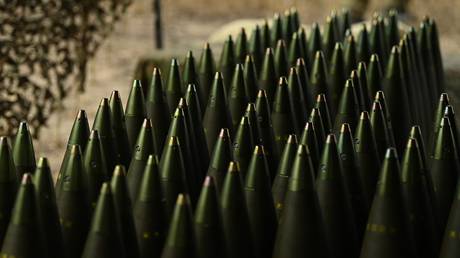
We can afford the missiles. We can always afford the missiles. The defense budgets of the G7 nations swell like bruised fruit every single fiscal year, fat with advanced avionics, cyber-warfare suites, and drone swarms designed to kill people from ten thousand miles away without ever looking them in the eye.
Yet when it comes to the unglamorous, grinding, low-margin work of sitting in a dusty room with two warring factions until they realize peace is cheaper than total annihilation? Suddenly the treasury is empty. Suddenly we have to tighten our belts. Suddenly we discover that we simply cannot afford the luxury of human decency on a global scale.
It is a choice. Never let anyone tell you it is an inevitability.
When a government trims its peacekeeping contributions, it is prioritizing short-term domestic electoral comfort over long-term planetary survival. It is trading a child's future in a fragile state for a temporary three-percent polling bump among suburban voters worried about inflation.
The tragedy is that the damage is invisible until it is irreversible.
You do not notice a peacekeeper who isn't there. You do not count the massacres that didn't happen because someone with a blue helmet and an interpreter had the courage to stand in the middle of the road and say no. You only see the aftermath. You see the rubber dinghies on the rocks. You see the mass graves on the evening news. You see the bitter diplomats standing at podiums in foreign capitals, lamenting cuts that everyone saw coming and no one had the spine to stop.
The high commissioner’s words should haunt us. Not because they reveal some new, secret geopolitical truth, but because they remind us of what we already know and choose to ignore.
We are retreating into our borders. We are pulling up the drawbridges. We are counting our coins in the dark while the world outside burns down to the foundations.
And when the fire finally reaches our own door, we will look around in bewildered panic, wondering why there is no one left to answer the bell.