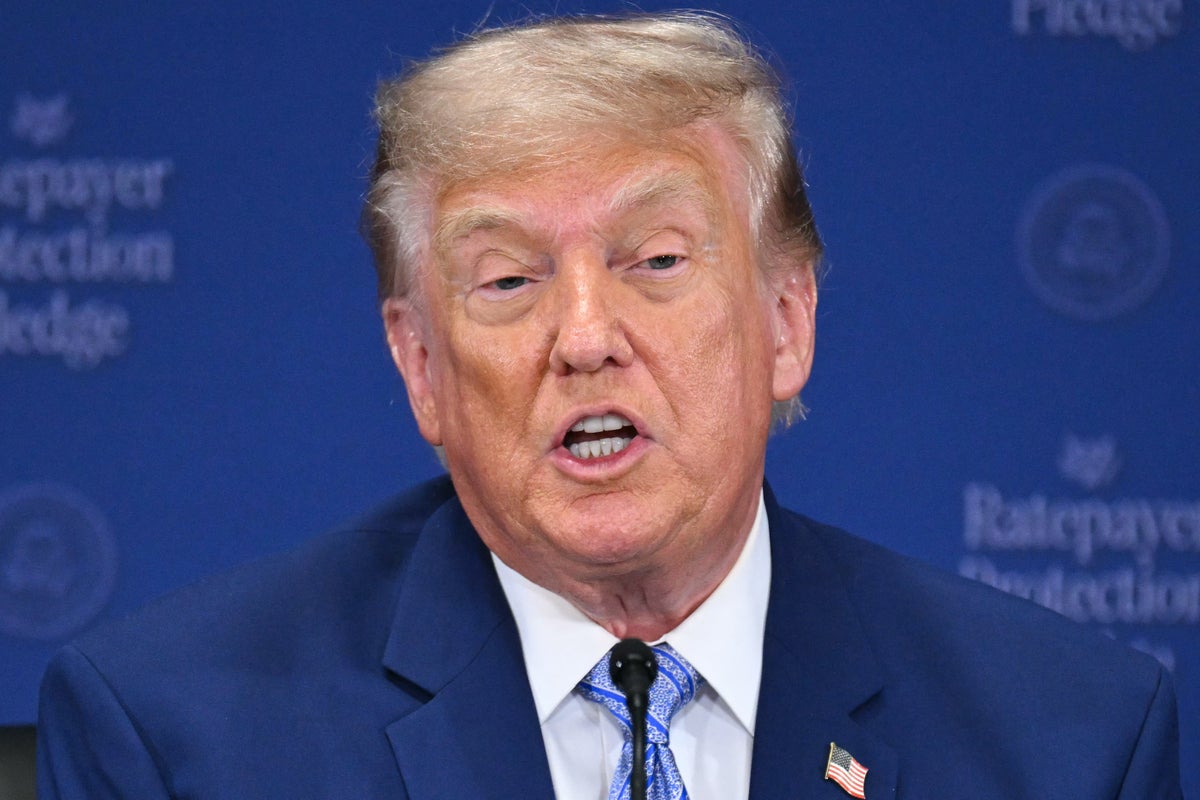
When U.S. President Donald Trump publicly confirmed that Chinese President Xi Jinping will visit Washington on September 24, 2026, to thrash out an agreement on artificial intelligence, he framed the upcoming summit in characteristic bombast as the biggest event the world has ever witnessed. Behind the public posturing lies a far more cynical and complex geopolitical calculation. Washington and Beijing are not preparing to sign a sweeping peace treaty for machine intelligence. Instead, both powers are scrambling to build guardrails around an escalation cycle that threatens to blow up their interconnected economies.
The September summit is the culmination of months of backdoor maneuvering following the leaders' preliminary meeting in Beijing. Before Xi even sets foot on the South Lawn, U.S. Treasury Secretary Scott Bessent will lead a specialized delegation into preliminary intergovernmental discussions aimed at establishing baseline security protocols. The agenda is deceptively narrow: preventing frontier model weights from falling into the hands of non-state actors and rogue groups.
That narrow focus is intentional. It is the only topic the two nations can discuss without instantly devolving into economic warfare. Beneath the diplomatic pleasantries, the real battle is over computational power, model theft, and the supply chains driving the next era of industrial dominance.
The Strategic Shift Behind Treasury Leading the Charge
Diplomatic traditionalists expected the State Department or the Department of Commerce to spearhead these bilateral technical talks. Secretary of State Marco Rubio laid the diplomatic groundwork in Manila during meetings with Chinese Foreign Minister Wang Yi, but the decision to put Treasury Secretary Scott Bessent in charge of the primary AI channel speaks volumes about Washington's true strategy.
AI governance is no longer viewed through the soft lens of international norms or standard diplomatic protocol. It is treated as an extension of international finance, trade leverage, and national security sanctions.
By positioning the Treasury Department at the head of the table, the White House is explicitly tying technical safety standards to economic access. Washington understands that China’s domestic tech ecosystem faces severe hardware constraints, primarily caused by strict export controls on advanced silicon. Treasury controls the mechanisms that enforce tariffs, oversee capital flows, and manage financial sanctions. Handing the file to Bessent signals to Beijing that any concessions on model safety, intellectual property, or open-source distribution will be directly traded against economic pressure valves.
This is a transactional approach to technology policy. The administration is betting that Beijing's desire to stabilize its broader economy will force Chinese leadership to negotiate hard rules on frontier software systems.
                  ┌──────────────────────────────────────────┐
                  │        September 24 White House          │
                  │              Trump-Xi Summit             │
                  └────────────────────┬─────────────────────┘
                                       │
           ┌───────────────────────────┴───────────────────────────┐
           ▼                                                       ▼
┌───────────────────────────┐                           ┌───────────────────────────┐
│     Economic Leverage     │                           │   Technical Friction      │
│  Led by Treasury (Bessent)│                           │ Model Distillation & Hardware│
└──────────┬────────────────┘                           └──────────┬────────────────┘
           │                                                       │
           ├─ Tariffs & Trade Policy                               ├─ Export Controls (GB300)
           ├─ Capital Flow Controls                                ├─ Weights Distribution
           └─ Financial Sanctions                                  └─ Frontier Model Security
Model Distillation and the Shadow War Over Weights
While politicians talk about broad cooperation, the intelligence and technology sectors are locked in a quiet, bitter struggle. Just days before the summit announcement, top officials in the White House Office of Science and Technology Policy raised alarm bells over sophisticated distillation techniques being employed by Chinese firms.
Distillation allows developers to train a smaller, cheaper artificial intelligence model using the outputs of a larger, highly expensive system developed by a competitor. American firms invest tens of billions of dollars in raw compute and datacenter infrastructure to build foundational systems like those from Anthropic or OpenAI. Chinese engineering teams then query those models millions of times, distilling their reasoning capabilities into domestic systems at a fraction of the cost.
Consider a scenario where an American research laboratory spends $500 million in electricity and advanced processor clusters to train an frontier network over eight months. A foreign rival can systematically query that network across targeted sub-domains, capturing its behavioral logic, and train a duplicate model for less than $5 million in compute costs.
This capability bypasses hardware sanctions. It allows foreign developers to extract maximum value from American datacenters without ever owning the underlying physical chips.
Beijing views this critique as hypocritical, arguing that western open-weight models have benefited from global data collection for years. Yet, internal discussions inside the Chinese government reveal their own deep anxieties. According to reports circulating through international trade channels, Beijing is quietly considering restricting international access to its own advanced open-weight models. Chinese regulators fear that unrestricted global deployment of their software could expose security vulnerabilities or allow foreign actors to reverse-engineer Chinese industrial systems.
Both sides are moving toward walled gardens, even as they stand at podiums extolling the virtues of international alignment.
The Compute Hardware Loophole Washington Wants to Close
No conversation about artificial intelligence between world leaders occurs in a vacuum. Hardware remains the fundamental bottleneck.
Washington’s export restrictions were designed to cut off Chinese entities from top-tier processing units and high-bandwidth memory modules. Despite these measures, enforcement has turned into an endless game of strategic whack-a-mole. Advanced GB300 processing systems and high-density compute clusters continue to route through third-party jurisdictions in Southeast Asia and the Middle East, allowing Chinese developers to rent access to high-end infrastructure through remote cloud agreements.
| Policy Objective | United States Position | China Position |
|---|---|---|
| Compute Infrastructure | Restrict advanced hardware access and close third-country cloud loopholes. | Maintain access to global supply chains and expand domestic fabrication. |
| Model Weights | Enforce strict security to prevent rogue proliferation and distillation. | Retain access to open-weight architectures while guarding proprietary state software. |
| Bilateral Guardrails | Focus on non-state threat mitigation and financial leverage. | Seek relief from tech export sanctions and establish equal tech parity. |
American negotiators intend to use the September bilateral talks to demand tighter auditing on cloud-rental platforms operating out of non-aligned nations. If an entity in Shanghai can execute large-scale training runs on servers physically located in South America or the Persian Gulf, the existing export control regime becomes meaningless.
Beijing, on the other hand, considers these demands an unacceptable overreach into global supply chains. Chinese diplomats maintain that technological containment strategies violate free-market norms, pointing out that domestic semiconductor initiatives are advancing despite American impediments.
The Fallacy of a Single Universal Accord
Media commentators frequently draw comparisons to 20th-century nuclear arms control treaties, suggesting that Washington and Beijing can simply agree on a cap for artificial intelligence capabilities. This comparison is fundamentally flawed.
Nuclear hardware is heavy, rare, and easily tracked via satellite reconnaissance and radiation signatures. Software algorithms and model weights are lightweight, infinitely duplicable, and easily transmitted over encrypted satellite links.
You cannot verify the size of an neural network with a satellite photo. You cannot inspect an algorithmic weight file with a physical border guard.
Because physical verification is virtually impossible, any treaty built on trust or mutual inspections is doomed to fail before the ink dries. The September summit will not produce a grand security treaty. It will produce an operational truce—a temporary agreement to manage immediate security risks, such as preventing autonomous systems from triggering unintended military escalation or protecting financial networks from automated chaos.
                 ┌──────────────────────────────────────────┐
                 │    Why Nuclear Analogy Fails for AI      │
                 └────────────────────┬─────────────────────┘
                                      │
           ┌──────────────────────────┴──────────────────────────┐
           ▼                                                     ▼
┌───────────────────────────┐                         ┌───────────────────────────┐
│     Nuclear Hardware      │                         │       AI Software         │
├───────────────────────────┤                         ├───────────────────────────┤
│ • Heavy and physical      │                         │ • Weightless code         │
│ • Rare materials (Uranium)│                         │ • Infinitely copiable     │
│ • Satellite verifiable    │                         │ • Cloud-accessible        │
│ • Clear physical trail    │                         │ • Impossible to audit     │
└───────────────────────────┘                         └───────────────────────────┘
Both nations realize that the true risk of advanced machine intelligence lies in unpredictable system behavior. When automated networks operate at microsecond speeds across defense networks, logistics corridors, and global capital markets, a single algorithmic anomaly could precipitate a crisis that neither human leadership intended.
Establishing direct hotlines between technical agencies in Washington and Beijing is not a luxury. It is a baseline requirement for avoiding accidental conflict.
What Happens When the Handshakes End
When Donald Trump and Xi Jinping pose for photo opportunities in late September, the rhetoric will be filled with claims of historic breakthroughs. Industry executives, defense analysts, and technology founders should look past the staged optics.
The fundamental conflict driving the technology race will remain entirely intact. The United States remains committed to preserving its lead in frontier architectures and silicon design. China remains equally committed to achieving complete technological self-reliance, insulating its economy from foreign pressure.
Key Takeaway for Industry Leaders: Expect short-term diplomatic stability to be accompanied by sharper regulatory enforcement. Companies relying on cross-border cloud infrastructure, international open-source distribution, or joint research projects between American and Chinese teams will face unprecedented scrutiny from both Treasury auditors and state security apparatuses.
The upcoming meetings in Washington will not solve the fundamental contradictions between the two systems. They will simply map out the parameters of a long, cold war over computational dominance. Organizations that mistake temporary diplomatic signaling for a genuine policy thaw will find themselves caught directly in the crossfire when national security priorities inevitably override market interests.


