Climate anomalies no longer manifest as isolated seasonal aberrations but as systemic structural shocks to continental food production systems. When regional authorities demand massive fiscal interventions, such as the recent appeals originating from the Grand Est administrative territory following acute hydrological stress, the discourse typically centers on compensation. However, viewing prolonged agricultural drought purely through the lens of short-term disaster relief misdiagnoses the economic mechanics at play. The underlying failure is an asset allocation mismatch between static farming models and highly volatile meteorological baselines. Addressing this friction requires dissecting the economic exposure of distinct production chains, evaluating the structural limits of existing European funding mechanisms, and redesigning the capital allocation strategies necessary for sector-wide adaptation.
The Cost Function of Hydrological Stress Across Value Chains
Agricultural vulnerability to moisture deficits is non-linear and unevenly distributed across sub-sectors. Standard economic assessments often lump crop losses into a single aggregate damage figure, obscuring the specific cost functions that govern individual commodities.
- Horticultural and Tubers Exposure: Crops characterized by high water content, such as potatoes and specialized field vegetables, exhibit severe yield suppression when soil moisture drops below critical saturation thresholds during tuber bulking phases. Production drops ranging from 20% to 50% destroy the revenue side of the farm ledger while fixed operational costs—land rental, machinery depreciation, and permanent labor—remain constant.
- Perennial Crop Acceleration: Viticulture faces a dual mechanism of degradation. Accelerated phenological cycles compress maturation timelines, leading to premature harvests that alter biochemical profiles, while cumulative vine stress compromises multi-year wood health and baseline yield potential.
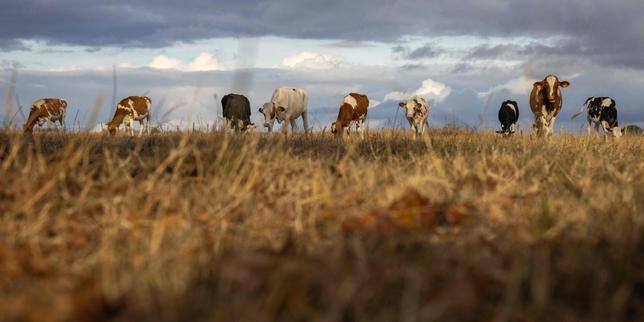
- Livestock Feed Deficits: Pastoral systems absorb drought shocks through the primary production bottleneck of forage availability. When grassland growth stalls, livestock enterprises face immediate substitution costs, forcing producers to liquidate herds prematurely or purchase external feed grains at inflated market rates.
The propagation of these micro-level shocks through the broader food processing chain creates liquidity squeezes. Upstream input suppliers face delayed receivables, while downstream processors experience raw material scarcity, compressing margins and driving consumer price inflation.
Structural Bottlenecks in European Agricultural Financing
Current policy frameworks, anchored primarily by the Common Agricultural Policy (CAP) and ad hoc national disaster funds, suffer from a design flaw: they are optimized for income stabilization during price volatility rather than structural transformation against systemic environmental drift.
The institutional reliance on ex-post compensation creates moral hazard and fails to build balance sheet resilience. When regional leaders lobby for multi-billion-euro emergency envelopes, they expose the inadequacy of existing financial safety nets. Bureaucratic latency delays fund disbursement past the operational window when capital could alter planting or irrigation decisions. Furthermore, funding criteria frequently penalize proactive investments by tying eligibility to historical production baselines rather than forward-looking efficiency gains.
To overcome these structural limitations, capital instruments must transition from reactive indemnification to forward-facing asset shielding. This means restructuring European budgetary priorities post-2028 to condition support on verified hydrological efficiency metrics rather than simple acreage subsidies.
Tactical Mechanics of Agronomic Adaptation
Moving beyond fiscal appeals demands operational changes at the farm management level. These interventions fall into three distinct categories of risk mitigation:
- Hydrological Infrastructure Optimization: Transitioning from broad-scale overhead irrigation to precision sub-surface drip irrigation systems minimizes evaporative loss and maximizes root-zone water use efficiency. Simultaneously, deploying localized farm-level retention basins captures winter precipitation peaks for summer utilization.
- Agronomic Diversification and Phenotypic Selection: Breeding and planting drought-tolerant crop cultivars with deeper root architectures and shorter vegetative cycles allows farms to bypass peak summer thermal stress windows. Intercropping and conservation tillage techniques improve soil organic matter, directly increasing moisture retention capacities.
- Risk Transfer and Parametric Insurance: Replacing traditional multi-peril crop insurance—which involves costly, slow loss-adjusting verification—with index-based parametric insurance ensures rapid liquidity release based on satellite-verified soil moisture or rainfall deficits.
Deploying these operational layers requires substantial upfront capital expenditure, which independent farms cannot shoulder alone during multi-year margin contractions.
Capital Reallocation and Strategic Execution
Financing the transition of European agriculture away from vulnerability requires an institutional overhaul of public-private risk sharing. The mechanism must utilize blended finance models where public guarantees unlock private institutional capital for long-term land transformation projects.
Instead of deploying capital toward temporary price supports that maintain inefficient production modalities in high-risk microclimates, funding must target structural exit paths or mandatory technological upgrades. Regional authorities must align infrastructure grants directly with verifiable watershed management plans. The strategic imperative is clear: capital must follow adaptation efficiency, or structural agricultural decline will outpace fiscal rescue capacity.