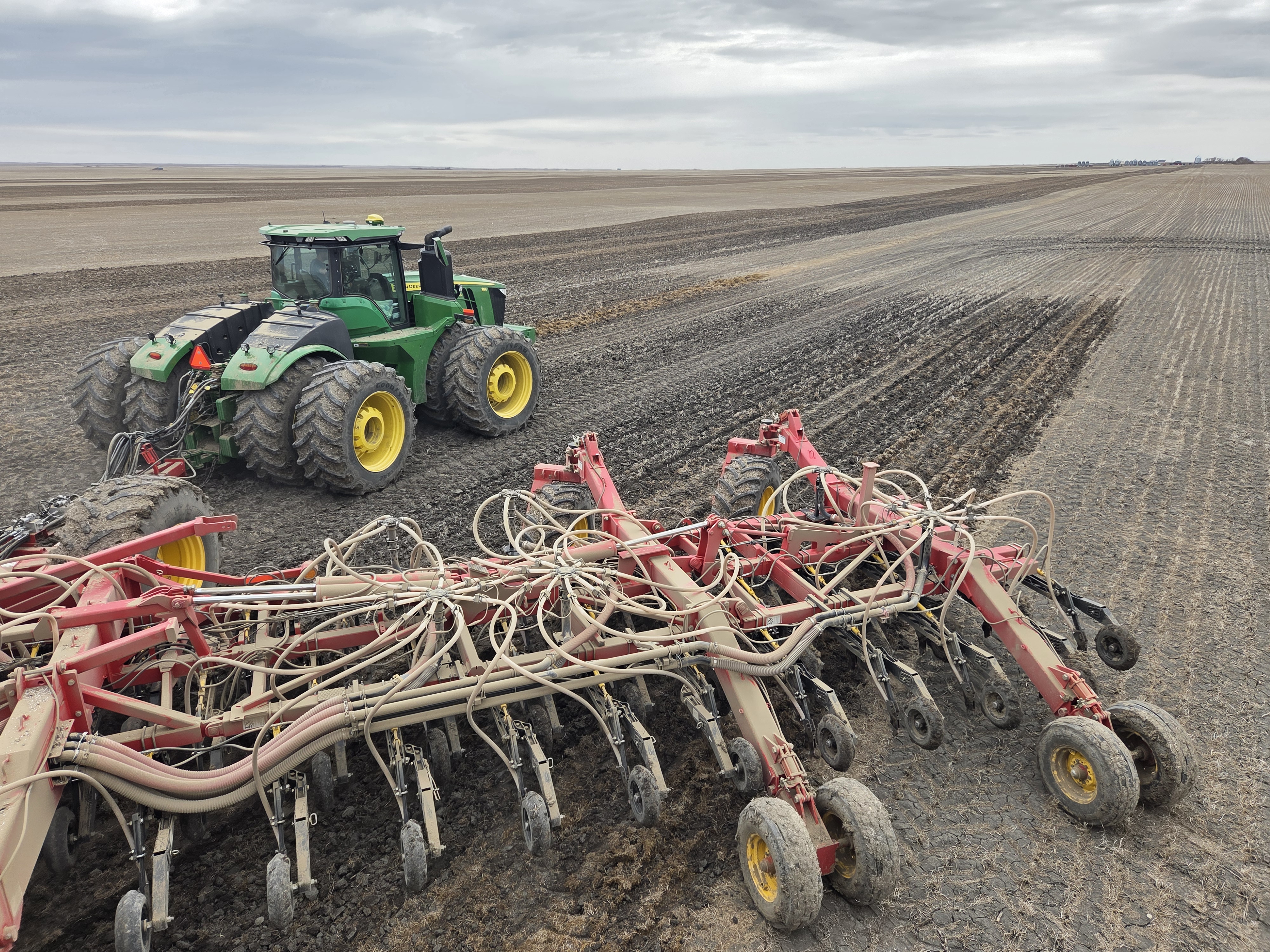
A compressed spring seeding window introduces severe operational friction into broadacre farming systems, triggering a chain reaction that directly impacts net yield and farm capitalization. In Saskatchewan, where late-season snowmelt and localized overland flooding structurally restricted early-field access, operations fell behind historical baselines. By mid-May, provincial seeding completion stood at 16 percent, lagging behind the five-year average of 28 percent. While a week of dry, windy conditions accelerated field access—allowing a 13-point jump from a baseline of just 3 percent—the macro-level progress masks deep regional variations and acute macroeconomic pressures.
Understanding the true impact of these delays requires moving past simple weather narratives. Instead, the situation must be analyzed through a precise operational and financial framework: the interaction between physiological crop windows, fixed asset utilization, and highly volatile macroeconomic input costs.
The Agronomic Loss Function: Thermal Time and Yield Penalties
The core constraint of Western Canadian crop production is the frost-free period, which establishes a strict boundary for the growing season. Agricultural systems operate on thermal time, measured in Growing Degree Days (GDDs). When seeding is delayed by saturated topsoil or road washouts, the planting date shifts closer to mid-summer heat and early autumn frost windows. This shift alters the crop's physiological timeline in two distinct ways:
- The Heat Blast Vulnerability: Delaying the seeding of long-season crops like canola forces the critical flowering stage into the high-temperature windows of July. Canola flowers are highly sensitive to temperatures above 30°C. High heat at this stage causes flower abortion and poor pod formation, structurally lowering potential yields regardless of late-season moisture.
- The Autumn Frost Intersection: Late planting pushes the final maturation phase into late August and September. This exposure increases the risk that an early fall frost will terminate the crop before seed filling is complete, reducing grain quality and downgrading premium food-grade crops to discounted feed grades.
To mitigate this risk, operators shift their planting order based on crop physiology. Early-season progress favors cold-tolerant and shorter-season crops. Data shows field peas and lentils leading field entry at 33 percent and 32 percent completion, respectively. Conversely, oilseeds like canola remain at a minimal 7 percent completion as growers prioritize crops that can maximize a truncated growing window.
Logistics Bottlenecks and Fixed Asset Utilization
To overcome a delayed start, agricultural operations must increase their daily work capacity. This capacity is defined by a strict asset equation:
$$\text{Daily Capacity} = \text{Equipment Width} \times \text{Velocity} \times \text{Operational Efficiency} \times \text{Available Hours}$$
When the planting window shrinks from the typical three weeks to a tight 10-to-14-day window, operators are forced to maximize their machinery utilization rates. This high-intensity push reveals clear operational limits across three main areas.
1. Capital Fleet Limits
Broadacre operations utilize high-capacity air drills and large articulated tractors. Under standard timelines, a single seeding unit can be shared across multiple fields through careful scheduling. When flooding delays field entry, these tracts must be seeded at the same time, forcing operators to choose between two costly options: accepting yield losses on unseeded land or investing heavily in extra machinery that sits idle during normal years.
2. Saturated Fields and Tract Efficiency
Low-lying fields with excess moisture force tractors to navigate around unworkable areas. This constant turning breaks efficient straight-line patterns, increasing fuel consumption per acre and extending total field time. The risk of heavy machinery getting stuck also introduces the threat of sudden, costly delays.
3. Supply Chain Strain
A compressed planting window causes sudden surges in regional supply chains. The demand for bulk diesel delivery, seed treatment, and fertilizer blending peaks all at once. This concentration of demand stretches local retail networks thin, creating a major vulnerability where even a small logistics delay can halt field operations entirely.
Macroeconomic Headwinds and the Margin Squeeze
The 2026 seeding season is unfolding under intense macroeconomic pressures that amplify the financial risks of any operational delay. Farmers are navigating high input costs that raise the break-even point per acre, making yield losses harder to absorb.
Global geopolitical conflicts have driven up energy and input markets, with regional diesel and nitrogen fertilizer prices nearly doubling historical baselines. Because nitrogen fertilizer applications must be precisely timed with seeding to prevent loss, any delay in planting directly ties up working capital in unused inventory. At the same time, high interest rates increase the carrying costs of spring operating loans, making every idle day in May increasingly expensive.
On the revenue side, market volatility complicates risk management. While the reduction of Chinese import restrictions on Canadian canola has opened up structural demand, international grain markets remain highly volatile. Farmers cannot rely on high grain prices to offset lower yields, which places the financial focus squarely on maximizing local production efficiency.
Regional Moisture Divergence and Long-Term Operational Risks
Evaluating the season purely on provincial averages hides a sharp, structural split between different regions in Saskatchewan. The province is split between managing immediate excess water and bracing for long-term moisture shortages.
[North & East Regions] -----> Slow Snowmelt & Flooding ------> Delayed Field Entry

[Southwest Region]     -----> Rapid Drying & High Winds -----> Moisture Deficits
In the northern and eastern grain belts, late-season snowmelt and high water tables have left up to 13 percent of cropland with excess moisture. This surplus completely blocks field access. Conversely, the southwest region has reached 34 percent completion, driven by dry conditions and strong winds that have rapidly depleted topsoil moisture.
This regional divide highlights a distinct operational challenge. While growers in the east are forced to delay operations due to standing water, growers in the southwest are rushing to plant seeds deep enough to reach receding moisture reserves before the topsoil dries out completely.
This divergence carries over into the livestock sector as well. While 75 percent of provincial producers report stable surface water levels, nearly half of operators in the southwest report that spring runoff was insufficient to refill critical grazing dugouts. This shortfall creates an operational hurdle for summer pasture management, forcing cattle producers to consider investing in deep-well infrastructure or hauling water to long-term pastures.
Strategic Playbook for Compressed Seeding Windows
When facing a structurally shortened spring season, agricultural operations must shift from standard management routines to an agile framework focused on maximizing asset velocity and managing risk.
Operators must prioritize fields by soil type and drainage capacity, running lighter equipment configurations on high-risk acres to minimize soil compaction and avoid getting stuck. If seeding stretches past optimal dates, switching to shorter-season varieties helps protect crop quality from autumn frost risks.
Financially, the high cost of inputs requires a shift from maximizing total volume to optimizing input margins. Applying nitrogen fertilizer at variable rates based on actual zone potential—rather than flat-rate applications—protects expensive inputs on flooded or underperforming acres. Finally, because a compressed season increases operational stress and fatigue-related risks, maintaining strict safety protocols around heavy machinery and high-voltage power lines is essential to prevent costly operational shutdowns.