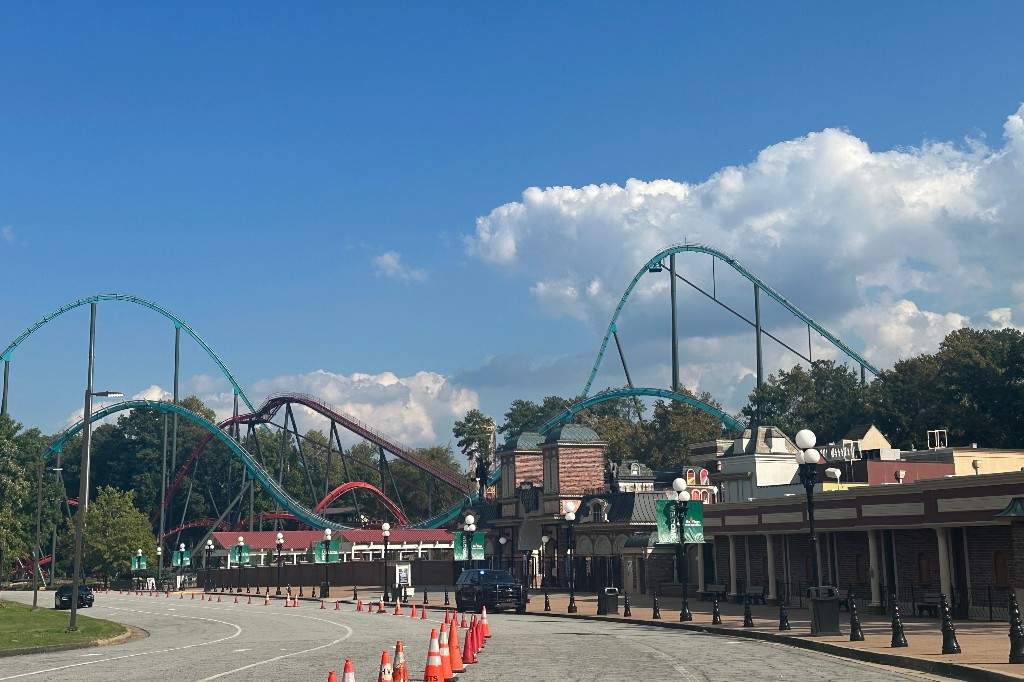
Mainstream media outlets are celebrating the news that Six Flags Over Georgia will add seat belts to a roller coaster following a tragic rider fatality.
They are wrong. Applauding this knee-jerk corporate reflex is not just misguided; it betrays a complete ignorance of amusement ride engineering, human psychology, and basic physics.
When a tragedy strikes at a theme park, the public demands blood, and corporate lawyers demand optics. The fastest way to appease both is to slap a cheap nylon strap onto a multi-million-dollar piece of precision machinery. Reporters write glowing headlines about "enhanced safety measures," lawsuits get settled quietly, and executives pat themselves on the back for protecting guests.
Meanwhile, the actual engineers who build these machines are quietly tearing their hair out. Adding redundant seat belts to modern lap-bar restraints does not solve mechanical failures or rider error. In many cases, it actively degrades the safety profile of the attraction while crippling operational efficiency.
The Myth of the Redundant Restraint
To understand why slapping a seat belt onto a coaster train is mostly performative, you have to understand how modern amusement restraints actually work.
For the last three decades, premier manufacturers like Bolliger & Mabillard (B&M), Intamin, and Rocky Mountain Construction (RMC) have engineered primary restraint systems—specifically hydraulic and ratcheting lap bars—to withstand forces exponentially greater than anything a human body will ever experience on a track. These systems are governed by strict ASTM International F24 standards, the global benchmark for amusement ride design and manufacturing.
A modern Class 5 restraint system uses dual-redundant hydraulic cylinders or mechanical locking pawls. If one cylinder fails, the second holds the full load. The geometry of the seat tub and the contour of the lap bar are mathematically sculpted to trap the rider's pelvis—the strongest skeletal structure in the human body—preventing ejection even under extreme negative G-forces (airtime).
Now, enter the automotive-style seat belt.
A standard two-point nylon webbing belt is rated to hold a fraction of the dynamic load that a steel-and-hydraulic lap bar handles effortlessly. When a park retrofits a seat belt onto a train designed strictly for a lap bar, that belt is not acting as a primary safety device. It is acting as a psychological pacifier.
The Fatal Flaw of "Safety Creep"
In the industry, we call this phenomenon "safety creep," and it comes with a documented, lethal side effect: restraint interference.
When you introduce a secondary belt to a seat designed for a single primary bar, you change the geometry of how the rider sits. I have walked ride platforms across North America and watched operators struggle with this exact problem. Here is what happens in the real world when parks retrofit belts onto existing rolling stock:
- False Positives on the Dispatch Panel: Ride operators are trained to check the lap bar by pulling up on it to ensure it is locked. However, modern computerized control systems rely on proximity sensors to verify that the lap bar has reached its minimum safe lowering threshold. A thick seat belt buckle, bunched up beneath a bulky lap bar, can physically block the bar from descending that critical final half-inch. Even worse, it can create a false sense of security for a harried teenage attendant who sees a buckled belt and assumes the primary restraint is properly engaged.
- The Visual Verification Trap: Before retrofits, an operator’s eyes went straight to the lap bar’s position relative to the rider's thighs. Once you add a belt, the operator must visually verify the buckle and physically tug the bar. Under the crushing pressure of 60-second dispatch intervals, human attention fractures. Splitting an operator's focus between a redundant strap and a primary hydraulic bar increases the statistical likelihood of missing an improperly seated rider.
- Delayed Egress in Real Emergencies: When a coaster valleys in a remote section of track, or when a lift-hill evacuation is required during an electrical fire or severe weather event, every second counts. Forcing panicked guests to fumble with two separate release mechanisms—especially when belts are tucked tightly beneath heavy, locked lap bars—turns a routine evacuation into a bottleneck.
The Real Reason Parks Add Seat Belts
If the engineering data shows that retrofitted seat belts offer negligible mechanical protection while complicating dispatch protocols, why does Six Flags keep doing it?
Follow the money. Specifically, follow the actuarial tables of commercial liability insurers.
When an incident occurs on a major thrill ride—whether caused by a guest intentionally defeating a restraint, a rider exceeding manufacturer size limits, or a tragic medical event—the park faces an immediate PR nightmare and inevitable litigation. Trial lawyers love to argue "negligence by omission." They will stand in front of a jury, hold up a $15 piece of nylon webbing, and ask a simple, devastating question: "If adding this strap could have saved a life, why didn't the park install it?"
Juries do not understand ASTM F24 dynamic load calculations. They understand seat belts because they use them in their Hondas every morning.
Therefore, corporate risk management teams force operations departments to install belts not to stop riders from falling out, but to stop plaintiffs' attorneys from winning in court. It is an expensive insurance policy disguised as guest care.
And the cost isn't just the hardware. Retrofitting a fleet of coaster trains requires custom engineering sign-offs from the original manufacturer (who often charge exorbitant consulting fees to approve modifications they didn't want in the first place), recertification with state inspectors, and permanent hits to hourly ride capacity.
The Capacity Death Spiral
Theme parks live and die by theoretical hourly ride capacity (THRC). If a roller coaster is designed to dispatch a train every 45 seconds, it can move roughly 1,600 riders per hour.
Add a seat belt to every seat. Suddenly, guests have to sit down, fish a belt out from behind their backs, buckle it, and then pull down the lap bar. Meanwhile, ride attendants have to lean into the cars, verify the buckle is latched (and not twisted or buckled into the adjacent seat), and then check the lap bar.
Dispatch times balloon from 45 seconds to 90 seconds.
Hourly capacity drops by 50 percent. Lines double in length. Guests spend two hours baking in the Georgia heat for a 90-second ride, buy fewer sodas, skip the gift shop, and leave furious. To compensate for the plummeting capacity, parks introduce paid skip-the-line passes, monetizing the very inefficiency their own safety theater created.
Dismantling the Public's Broken Questions
Whenever a theme park tragedy hits the news cycle, search engines flood with the same panicked, fundamentally flawed questions. Let's look at what the public is asking—and why they are asking the wrong things entirely.
"Are roller coasters without seat belts safe?"
This question assumes that a seat belt is the baseline standard of safety, and anything lacking one is inherently reckless. The exact opposite is true.
Some of the safest, highest-thrill coasters on earth—including B&M hypercoasters like Goliath at Six Flags Over Georgia or Nitro at Six Flags Great Adventure—were engineered from the ground up to operate without seat belts. Their clamshell lap bars are marvels of mechanical reliability. When you see a coaster running without seat belts, you are looking at a machine operating in its purest, manufacturer-intended state. When you see a coaster with clunky, awkwardly routed belts bolted onto the side of the seat tub, you are looking at a machine that has been compromised by lawyers.
"Why don't all rides have over-the-shoulder harnesses?"
Because over-the-shoulder restraints (OTSRs) are violent, uncomfortable, and unnecessary for most ride profiles. Traditional hard-plastic OTSRs cause severe head-banging (ear boxing) during rapid lateral transitions, leading to headaches, neck strain, and miserable guest experiences. Furthermore, OTSRs often accommodate a smaller range of body types than modern lap bars, leading to more walk-of-shame moments at the station when larger guests cannot get the restraint to click. Modern engineering has moved away from OTSRs precisely because secure pelvic restraints offer superior safety without beating the rider's skull to a pulp.
"How can I make sure my restraint is safe?"
Stop worrying about the presence of a seat belt and start paying attention to body positioning. The single biggest variable in ride safety is the human body inside the seat.
- Sit all the way back: Push your lower back firmly against the seat cushion before pulling the restraint down. Slouching creates artificial slack between your pelvis and the bar.
- Empty your pockets: Bulky wallets, phones, and keys jammed into front pockets prevent lap bars from resting flush against your hip bones.
- Never pull up on the bar: Riders constantly yank upward on their lap bars to "test" them after the attendant checks them. On ratcheting systems, this is fine; on certain hydraulic systems, aggressive upward yanking by hundreds of riders a day accelerates wear on the locking valves. Let the attendant do the physical check.
The Uncomfortable Truth About Theme Park Fatalities
Let’s address the elephant in the midway, because the mainstream news articles dancing around the Georgia tragedy won't say it out loud.
Amusement park rides are extraordinarily safe. According to data compiled annually by the International Association of Amusement Parks and Attractions (IAAPA) and the National Safety Council, the chance of being seriously injured on a fixed-site amusement ride in the United States is roughly 1 in 15.5 million. You are statistically far more likely to die driving to the theme park than you are riding anything inside it.
When a fatality does occur on a modern coaster, it almost never happens because a mechanical restraint spontaneously exploded mid-air.
Fatalities happen for three reasons:
- Undiagnosed pre-existing medical conditions (aneurysms, heart arrhythmias) triggered by extreme G-forces and adrenaline spikes.
- Intentional rider misconduct—standing up, bypassing locked restraints, or hopping fences into restricted low-zone areas to retrieve dropped cell phones.
- Human error during maintenance or operation, such as mechanics bypassing safety sensors or operators ignoring clear height/size restrictions.
Notice what is missing from that list? A lack of a two-inch nylon strap.
If a guest suffers a fatal cardiac event on a lift hill, a seat belt doesn't save them. If a teenager hops a six-foot security fence to grab an iPhone beneath an inverted coaster train traveling 60 miles per hour, a seat belt doesn't save them. And if a ride operator fails to notice that a guest's body proportions prevent a lap bar from locking into its safe zone, adding a seat belt simply gives that operator one more distraction to miss.
Admitting the Downside of the Pure-Engineering Approach
To be completely transparent, relying purely on manufacturer-designed primary restraints without secondary belts has one undeniable flaw: it leaves zero room for catastrophic operator negligence.
In 2022, a 14-year-old boy tragically fell to his death from the Orlando FreeFall drop tower. Subsequent investigations revealed that ride attendants had manually adjusted the proximity sensors on two seats to accommodate larger guests, allowing the ride to dispatch even when the over-the-shoulder harness was nowhere near closed. Had that ride been equipped with a secondary belt tethered directly to the harness—and had operators been strictly forbidden from dispatching without it—that gap might have been caught.
That is the steel-man argument for secondary restraints. When human beings deliberately sabotage or ignore primary safety systems, a mechanical backup can act as a last-ditch failsafe.
However, the solution to operators bypassing safety sensors is not ruining the operational integrity of every roller coaster in the country with redundant belts. The solution is better training, higher wages to retain competent ride operators, strict enforcement of manufacturer rider-size envelopes, and severe criminal penalties for staff who tamper with safety hardware.
Stop Rewarding Corporate Panic
The next time you read a headline praising a theme park for adding seat belts after an accident, recognize it for what it is: a press release disguised as journalism.
True safety in the amusement industry is invisible. It lives in ultrasonic weld testing on steel tracks, dual-redundant hydraulic circuits, rigorous morning preventative maintenance checklists, and well-paid, alert ride operators who aren't rushed through 40-second dispatch quotas by corporate bean-counters.
Bolting a cheap strap onto a precision-engineered coaster train doesn't protect you. It protects Six Flags' stock price, pads lawyers' pockets, and doubles your wait time in the summer sun.
Demand better engineering, demand better staffing, and stop applauding the theater.