You don't just listen to Abdullah Ibrahim. You feel the weight of history in every single keystroke. When news broke on Monday that the legendary South African jazz pianist passed away peacefully in Germany at the age of 91, it didn't just mark the end of an era. It signaled the passing of a man who literally weaponized the piano against a brutal, racist state.
Most headlines will tell you he was a great jazz musician who lived in exile. That is true, but it misses the entire point. Ibrahim didn't just play music. He captured the soul of a fractured nation, exported it to the world, and brought it back home to help rebuild South Africa. His death after a short illness closes a monumental chapter in global music. But if you think his voice goes silent now, you're entirely wrong.
The Sound of District Six
He wasn't born Abdullah Ibrahim. He came into the world as Adolph Johannes Brand in 1934, growing up in Cape Town's vibrant, chaotic District Six. It was a multicultural melting pot of freed slaves, immigrants, and indigenous communities. The apartheid regime eventually bulldozed the entire neighborhood to the ground in the late 1960s, declaring it a "whites-only" area.
Ibrahim absorbed everything around him. His grandmother played piano for the local African Methodist Episcopalian church. His mother led the choir. He heard traditional Khoi-san songs mixed with American jazz records and Cape Malay musical traditions. By age seven, he was picking out these melodies on the keys. By fifteen, he made his professional debut.
People called him Dollar Brand back then. It was a nickname he earned because he used to buy American jazz records from sailors in the Cape Town harbor using US dollars. He wasn't just copying American bebop, though. He was blending it with South African realities.
In 1959, he formed the Jazz Epistles alongside legendary trumpeter Hugh Masekela and saxophonist Kippie Moeketsi. They made history by recording the first-ever jazz album by Black South African musicians. It was brilliant, fast, and revolutionary. But the apartheid government noticed.
Fleeing the Regime and the Duke Ellington Break
The white-minority government hated jazz. It was inherently counter-cultural. It encouraged Black and white people to mix in underground clubs. It was dangerous to the state. As the laws grew increasingly rigid and violent, the Jazz Epistles were forced to break up. In 1962, the very same year Nelson Mandela was thrown into prison, Ibrahim fled South Africa.
He ended up in Switzerland, frustrated and broke. That's where fate stepped in. His future wife, the incredibly talented jazz singer Sathima Bea Benjamin, cornered American jazz royalty Duke Ellington at a club in Zurich. She convinced Ellington to listen to her husband play.
Ellington didn't just listen. He was stunned. He immediately flew the young pianist to New York, set up a recording session with Reprise Records, and championed him to the global jazz elite. Ibrahim suddenly found himself studying at Juilliard and collaborating with avant-garde icons like John Coltrane, Don Cherry, and Ornette Coleman.
Yet, New York wasn't his home. His heart was stuck in the townships of Cape Town. In 1968, searching for spiritual grounding in a life defined by displacement, he returned briefly to South Africa and converted to Islam, changing his name to Abdullah Ibrahim.
The Three Minutes That Shook an Empire
If you want to understand why Ibrahim is a historical giant and not just a jazz footnote, you have to listen to a track recorded in 1974 called Mannenberg.
Ibrahim slipped back into Cape Town for a clandestine recording session. He sat down at an upright piano that happened to have thumbtacks stuck into the hammers—a common trick in the townships to give the instrument a bright, metallic, percussive edge. He started improvising a melody rooted in the Marabi and Kwela street styles of his youth.
The result was a masterpiece of hypnotic, joyful defiance. It shouldn't have worked. It was a jazz instrumental released during a period of intense state censorship. But the track spread like wildfire through the townships. It became the unofficial national anthem of the anti-apartheid movement. Activists blasted it from speakers at political rallies and underground gatherings.
The regime couldn't stop a melody. Mannenberg gave a voice to millions of people who had been legally stripped of theirs. It proved that culture could be just as potent as any political blockade.
Returning to a Free South Africa
When Nelson Mandela was finally released from prison in 1990 after 27 years, one of the first things he did was invite Abdullah Ibrahim to return home from exile. Ibrahim didn't just return; he performed at Mandela’s historic presidential inauguration in 1994.
Mandela famously looked at Ibrahim and made a statement that redefined how the country viewed its own cultural capital. He said: "Bach, Beethoven? We have better!"
Ibrahim spent his remaining decades moving between Europe, America, and a free South Africa. He composed orchestral suites, wrote film scores for directors like Claire Denis, and studied Japanese martial arts, earning a black belt in koryu budo. He even passed his musical genes down to a new generation; his daughter is the acclaimed New York underground rapper Jean Grae.
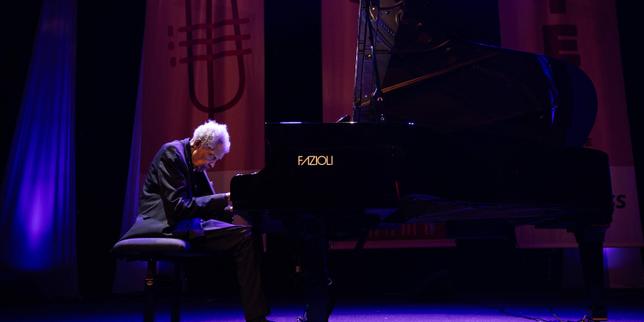
Up until his final months, he refused to stop. Just this past March, he took the stage at the Cape Town International Jazz Festival for a solo performance that left the audience in tears. He sat at the piano at 91 years old, frail in body but immense in spirit, pouring seven decades of exile, triumph, and memory into the keys.
To honor his legacy today, don't just read his obituary. Pull up a streaming service, search for Mannenberg or Cape Town Flowers, and turn the volume up. Listen to the way he spaces out his chords. Notice the silence between the notes. That isn't just jazz. That's the sound of a man who played his way through an empire and won.