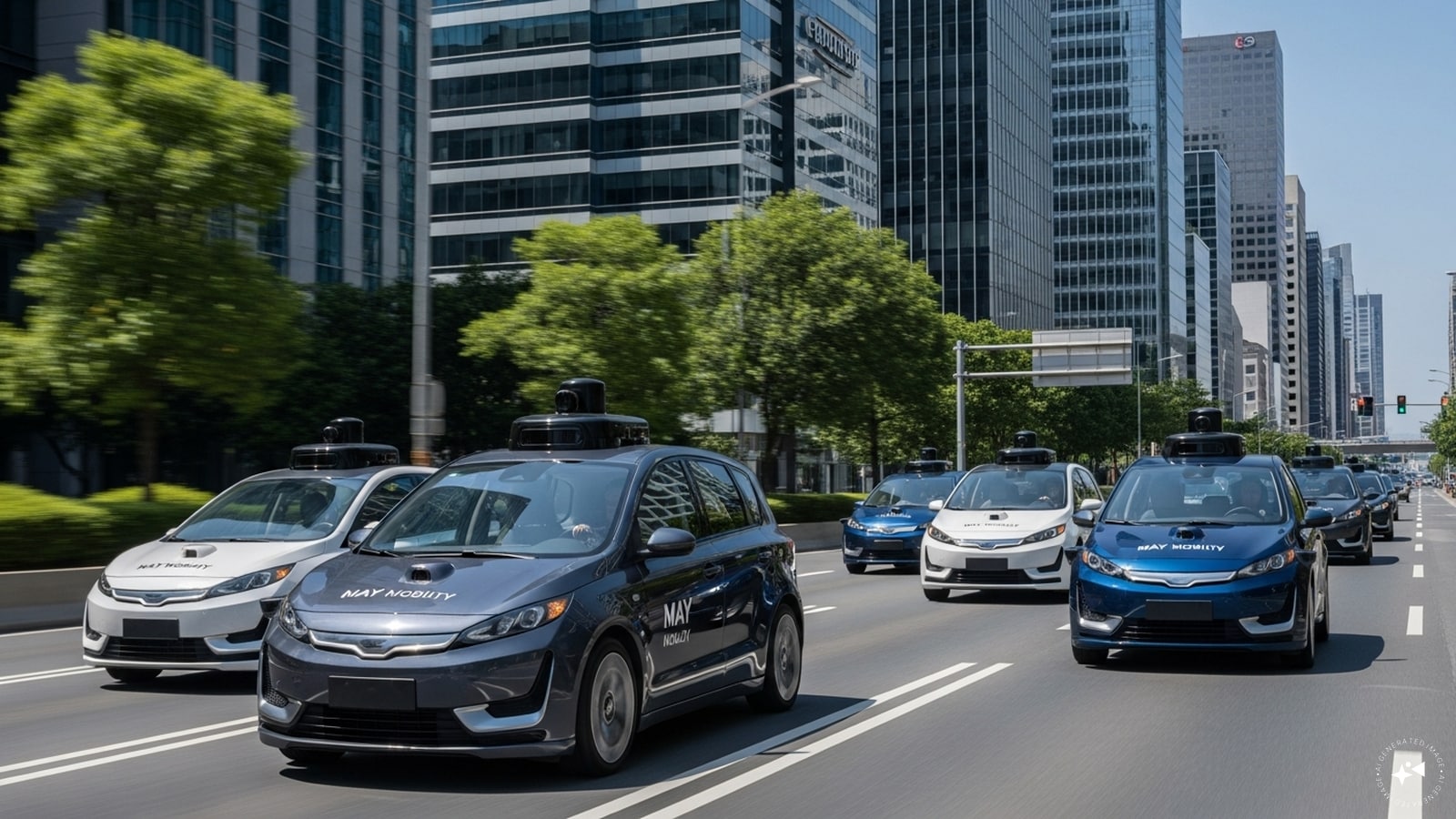
The financial press is falling over itself to praise the latest massive headline in autonomous driving. ECARX and May Mobility signed a strategic framework agreement valued at an estimated $750 million. The goal is to build thousands of purpose-built robotaxis by 2028 and slash vehicle costs by 50%. The consensus view is clear. Analysts claim this is a masterstroke to achieve commercial scale and challenge market incumbents like Tesla and Waymo.
They are entirely wrong.
This partnership does not solve the actual bottleneck of autonomous ride-hailing. It highlights a structural delusion that has plagued the sector for a decade. The industry remains obsessed with cheap hardware and factory-level sensor integration while ignoring the reality of operations, utilization, and regulatory friction.
The Low Cost Hardware Illusion
The core promise of the ECARX deal is a massive 50% reduction in all-in vehicle costs by 2028. ECARX intends to deliver custom Level 4 central computing platforms and a full-stack integrated sensor suite direct to a third-party vehicle platform. The logic sounds clean on paper. By moving away from costly aftermarket retrofits and integration overhead, factory-installed hardware brings consumer-car supply chain economics to robotaxis.
But cutting the cost of the computer and the LiDAR in half misses the financial point entirely.
I have seen companies blow hundreds of millions of dollars optimizing the wrong part of the balance sheet. In autonomous fleet operations, hardware depreciation is a secondary line item compared to the brutal reality of operational expenditure. A cheaper robotaxi sitting idle because of a software edge case, an unmapped construction zone, or an unfavorable local regulation bleeds capital just as quickly as an expensive one.
The industry behaves as if vehicle manufacturing cost is the dam holding back profitability. It is not. The dam is fleet utilization and the density of localized demand. If your vehicle costs $40,000 to manufacture instead of $80,000, but your remote teleoperation ratio remains high or your cars cannot handle complex urban density without human intervention, you have merely built a cheaper asset to lose money with.
The Geopolitical Shell Game
The second major point of praise for this deal is its structural compliance. To navigate the stringent rules governing information and communications technology in connected vehicles, the hardware and sensor systems will be manufactured entirely outside China. Because ECARX is heavily backed by Li Shufu, the billionaire founder of Geely, this offshoring strategy is being cheered as a brilliant regulatory workaround.
This is a temporary band-aid on a systemic wound.
The idea that shifting assembly lines out of China will completely immunize a company from Western regulatory scrutiny is naive. Western regulators are shifting their focus from simple manufacturing origin to corporate ownership, data governance, and underlying software provenance. ECARX is a London-headquartered, Nasdaq-listed entity, but its deep roots in the Geely ecosystem mean its intellectual property and supply chain dependencies remain tied to Eastern tech ecosystems.
Imagine a scenario where thousands of these vehicles are deployed in American cities by 2028, only for trade policy to shift again, targeting any technology linked to Chinese automotive software architectures. The legal and operational overhead required to continually re-engineer supply chains for compliance eats the exact margins this hardware alliance claims to protect.
The Wrong Way to Move Fast
Consider how this approach contrasts with the broader market. The tech press frames every single autonomous driving announcement as a shot fired at Tesla or Waymo. But comparing May Mobility’s strategy to its competitors reveals a fundamental mismatch in how scale is actually achieved.
- Waymo focuses on absolute software supremacy and localized operational dominance. They accept high hardware costs up front because they understand that a highly utilized, reliable vehicle generates the data and revenue needed to subsidize future hardware iterations.
- Tesla focuses on a unified, vision-only architecture deployed across millions of consumer vehicles already on the road. They crowd-source their data and engineering validation from paying customers, bypassing the need to fund a dedicated $750 million hardware supply chain before the software is fully mature.
May Mobility and ECARX are attempting a middle path that risks the downsides of both. They are committing to an expensive, multi-year hardware roadmap on a non-binding framework agreement before their underlying software—which relies on a predictive world model simulating ten seconds into the future—has proven it can handle the chaotic, unsimulated operational domains of mass commercial transit.
Scale Requires Certainty Not Frameworks
The most critical detail buried in the disclosures is that this $750 million project value is directional. It is entirely conditional on definitive agreements and regulatory determinations. In the autonomous vehicle sector, a framework agreement is often little more than an expensive letter of intent designed to signal momentum to public markets.
ECARX is managing its own pressures. Its recent earnings show positive adjusted EBITDA, but executives explicitly flagged memory cost inflation, noting that DDR costs have surged by more than 300% over the past year. When core component costs escalate wildly, the promise of a 50% reduction in all-in hardware costs by 2028 becomes an incredibly risky bet.
True scale in autonomous mobility is not achieved by signing massive supply commitments for unbuilt vehicles on third-party platforms. It is achieved by solving the brutal, unglamorous problem of edge-case software reliability and local market saturation. Until an autonomous vehicle can operate anywhere, anytime, without a remote safety driver or a dedicated support crew, building thousands of them at a factory level is simply scaling a liability.