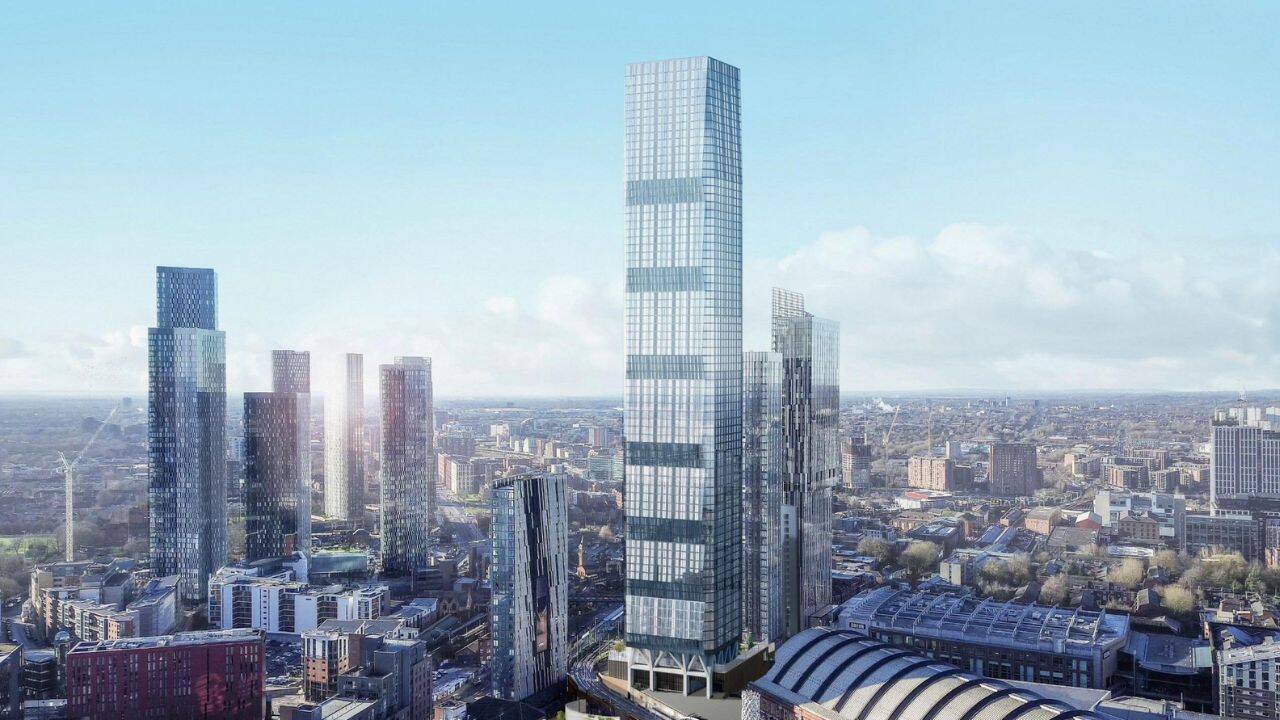
Forty-six and a half million pounds. That's the price tag a UK court just slapped on developer Urban Splash and four associated firms to fix dangerous fire-safety defects in Manchester.
If you've followed the UK's post-Grenfell cladding crisis, you know how rare an actual financial reckoning feels. For years, leaseholders across Britain have been trapped in unsellable flats, staring down bankruptcy-inducing service charges while the companies that built those towers hid behind complex corporate structures. This ruling changes the math. It proves that the legal mechanisms introduced to protect residents aren't just paper tigers anymore. Don't forget to check out our earlier post on this related article.
Let's be clear about what happened here. Urban Splash, a prominent regeneration developer famous for transforming industrial spaces across northern England, alongside four other firms, has been ordered to foot a £46.5m bill for fire-safety remediation in Manchester. The case centered on residential developments requiring urgent structural and cladding repairs to meet modern fire-safety standards. Rather than leaving taxpayers or individual flat owners holding the bag, the tribunal pushed the financial responsibility straight back up the supply chain.
Why This Manchester Ruling Hits Different
Most property disputes in the UK drag on behind closed doors, ending in confidential settlements where nobody admits fault. This didn't. A public order forcing a high-profile developer and four linked companies to pay £46.5m sends a shockwave through every boardroom in the British construction sector. If you want more about the history here, NPR offers an in-depth breakdown.
You can't separate this decision from the Building Safety Act 2022. Before that legislation became law, developers routinely used Special Purpose Vehicles (SPVs)—single-project shell companies—to build a block of flats, sell the units, and dissolve the company. When fire defects showed up a decade later, there was nobody left to sue. The Building Safety Act closed that loophole by introducing Remediation Contribution Orders (RCOs).
An RCO allows tribunals to look past corporate veils and compel associated companies—parent firms, sister companies, and linked partnerships—to pay for fire-safety fixes. That's why "Urban Splash and four firms" appears in the court order. The law now follows the money, not just the dissolved shell entity that signed the original building contract.
Honestly, it's about time. For nearly a decade following the 2017 Grenfell Tower tragedy, the default response from too many developers was delay, deny, and litigate. Meanwhile, leaseholders couldn't sell, couldn't remortgage, and couldn't sleep soundly knowing their walls were wrapped in combustible materials.
How Remediation Contribution Orders Actually Work
If you're a leaseholder or a property professional trying to understand how a tribunal reaches a £46.5m figure, you need to look at how Section 124 of the Building Safety Act operates in practice. It isn't a criminal fine. It's a financial order designed purely to fund the physical work required to make a building safe.
Here is what a First-tier Tribunal looks at when deciding whether to issue an RCO:
- Relevant defects: The building must have safety flaws arising from work done during construction or refurbishment within a 30-year window prior to June 2022. This covers flammable cladding, missing cavity barriers, and faulty fire doors.
- Corporate association: Applicants don't just target the original builder. Under the Act, any company that shared directors, control, or ownership structures with the developer can be pulled into the proceedings.
- The "just and equitable" test: Tribunals don't need to prove traditional negligence in the way a High Court construction lawsuit requires. If the defect exists and the companies are linked, the tribunal decides whether it's fair for them to pay.
Think about how radically that shifts the burden of proof. In the past, a resident management company had to spend millions on forensic engineers and construction lawyers just to prove a contractor breached a specific building regulation twenty years ago. Most ran out of money before reaching trial. Now, the focus is much simpler: is the building unsafe, and who profited from building it?
The Myth of the Innocent Developer
Whenever a massive remediation bill hits the headlines, industry lobbyists immediately complain that retrofitting old buildings bankrupts developers and stalls new housing supply. Don't buy it.
Look closely at the profit margins during the 2000s and 2010s city-center apartment boom in places like Manchester, Leeds, and Birmingham. Developers built high-density schemes at breakneck speed, often relying on self-certification and light-touch building control. Cutting corners on compartmentation—the hidden fire-stopping walls inside ceiling voids—saved time and money during construction. Fixing those mistakes after residents have moved in costs ten times more.
When Urban Splash built its reputation in Manchester, it was celebrated for bold urban regeneration. Turning derelict mills and brownfield sites into sleek loft apartments won awards and reshaped the city's skyline. Nobody doubts the aesthetic impact of that work. Still, great architecture means nothing if the fire-stopping behind the plasterboard fails.
Ordering the developer and four associated entities to cover £46.5m doesn't punish innovation. It simply enforces basic accountability. If you build homes and sell them for profit, those homes shouldn't become death traps when a kitchen fire breaks out on the fourth floor.
What Most People Get Wrong About Cladding Remediation
There's a massive misconception floating around the UK property market right now. People assume the cladding crisis is basically over because the government signed a developer pledge and set up the Building Safety Fund.
That couldn't be further from the truth. Thousands of mid-rise and high-rise buildings across England remain stuck in limbo. Even when funding is approved, getting boots on the ground takes years. Scaffolding goes up, residents live behind plastic sheeting for twenty-four months, and unforeseen structural defects frequently double the original repair estimate.
Another common mistake is thinking "cladding" only refers to the aluminum composite material (ACM) used on Grenfell Tower. In reality, many recent tribunal cases—including major Manchester developments—involve a messy combination of flaws:
- Timber decking and combustible balconies that allow flames to jump vertically between floors.
- Missing or improperly installed cavity barriers behind brick slips and render systems.
- Defective internal fire doors and compromised escape routes that fail to contain smoke.
When surveyors strip back the exterior facade of a 2000s apartment block, they almost always find deeper structural fire-safety failures. That's how remediation budgets balloon from £5m to £46.5m in a matter of months.
The Ripple Effect Across Manchester and Beyond
Manchester has been the epicenter of the UK's high-rise residential boom—and consequently, the epicenter of its building safety crisis. Walk through Ancoats, Castlefield, or the Northern Quarter, and you'll see dozens of buildings that have either undergone invasive waking-watch patrols or spent years wrapped in scaffolding.
This £46.5m order sets a benchmark that other freehold owners, right-to-manage companies, and government enforcement bodies will immediately use as leverage. Up until now, many associated companies argued that they were financially separate from the specific subsidiary that built a defective block. The Manchester decision proves tribunals have zero patience for corporate shell games when £46.5m of life-safety work is on the line.
It also puts immense pressure on insurers and lenders. High-street mortgage lenders have been slowly easing restrictions on flats in buildings with fire-safety issues, provided there is a clear, funded remediation plan in place. A legally binding £46.5m payment order gives lenders the certainty they need to start approving mortgages again in affected developments. For leaseholders who have been trapped as "mortgage prisoners" for years, that legal certainty is worth its weight in gold.
What You Should Do If You Own or Manage a Leasehold Flat
If you're a leaseholder in a building still awaiting fire-safety repairs, or a director on a Resident Management Company board, you shouldn't sit around waiting for your freeholder to do the right thing. The legal landscape has tilted in your favor, provided you use the tools available.
Start by auditing your building's status right now:
- Demand the latest FRAEW: Request the Fire Risk Appraisal of External Walls (conducted under PAS 9980 standards) from your managing agent. You have a legal right to see the exact technical findings, not a sanitized summary.
- Check leaseholder protections: Verify whether your flat qualifies for statutory leaseholder protections under the Building Safety Act 2022. If you own three or fewer UK properties and your building is over 11 meters (or five storeys), you are legally shielded from paying for cladding removal, and non-cladding costs are strictly capped.
- Trace the corporate web: Don't accept excuses if the original builder was liquidated. Use Companies House records to map out parent companies, shared directors, and associated partnerships that existed at the time of construction.
- Push for a Section 124 application: If the developer or associated firms are stalling on paying for repairs, instruct specialist building safety solicitors to pursue a Remediation Contribution Order through the First-tier Tribunal. You can also alert the Ministry of Housing, Communities and Local Government's Recovery Strategy Unit, which actively pursues recalcitrant developers.
The £46.5m order against Urban Splash and its four associated firms proves that even major industry players can be forced to pay when pushed through the proper legal channels. Document every defect, keep pressure on your managing agents, and use the statutory powers designed to protect your home.