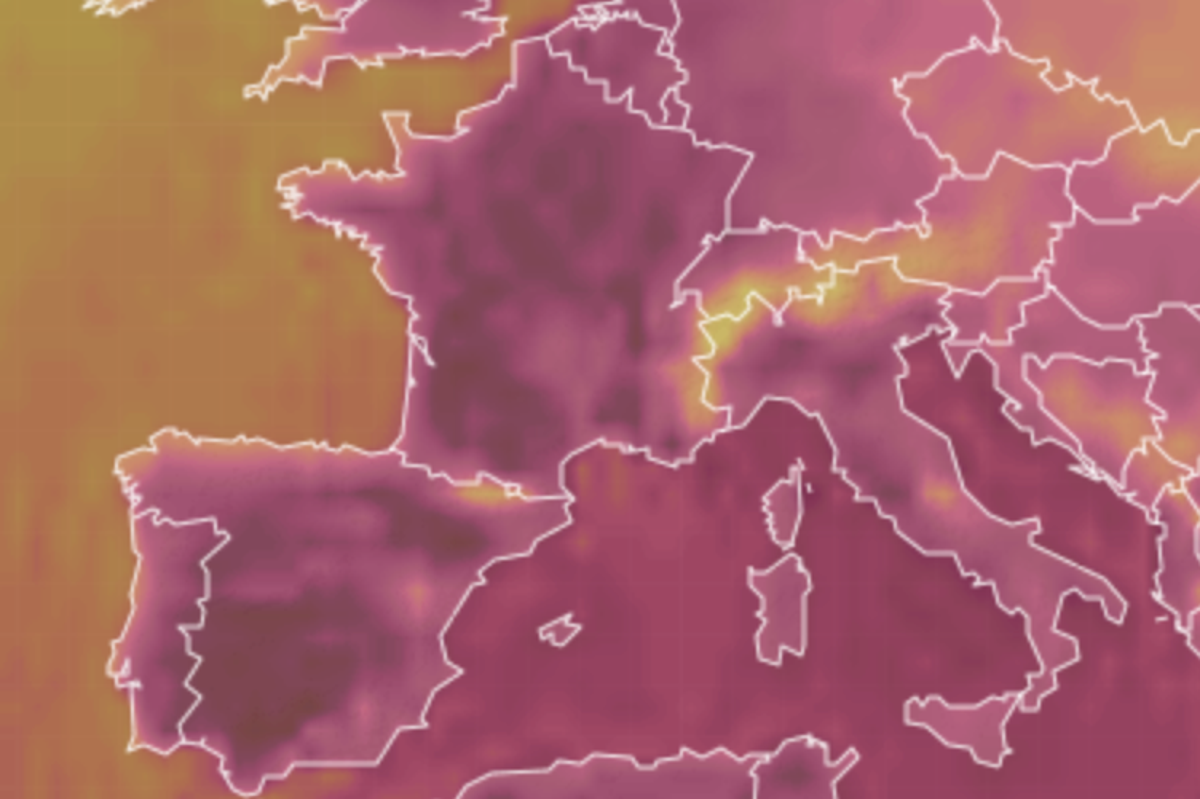
Temperatures across large stretches of Spain and France are pushing toward 43 degrees Celsius, transforming the Mediterranean basin into a slow-moving pressure cooker. Tourists still crowd the pavement, squinting against the glare, while local authorities issue urgent safety alerts and restrict water usage in rural agricultural sectors.
This is no longer an anomaly. It is the baseline reality for modern European summers, demanding a fundamental overhaul of how millions of residents and visitors survive the seasonal furnace.
Meteorologists track the blocking high-pressure systems sitting squarely over the Iberian Peninsula and southern France. These domes of hot air trap thermal energy, preventing cooling nighttime breezes from sweeping inland from the Atlantic or the Mediterranean. Ground soil moisture drops to historic lows. Without moisture to absorb the sun's energy through evaporation, every drop of solar radiation goes straight into heating the air.
The result is a self-sustaining cycle of extreme heat that drains municipal water reserves and stresses energy grids to their absolute breaking point.
The Infrastructure Blind Spot
Old architecture in Seville, Madrid, and Marseille was built to breathe. Thick stone walls, interior courtyards, and narrow streets provided natural shading and ventilation for centuries. Modern development, however, traded thermal mass for concrete and glass.
Urban heat islands now trap heat long after sunset, keeping nighttime temperatures stubbornly above 25 degrees Celsius. When homes cannot cool down at night, the human body gets no reprieve from cardiovascular stress.
Municipal planners missed the warning signs for decades. Zoning laws permitted expansive asphalt parking lots and steel-heavy office complexes without mandatory shading requirements or light-reflective surface coatings. Retrofitting these cities requires billions of euros and massive political will.
Local governments are experimenting with white roofs, urban pocket forests, and permeable pavement, but the scale of the transition lags far behind the accelerating climate data.
+-------------------------------------------------------------+
|               Urban Heat Island Amplification               |
+-------------------------------------------------------------+
| Traditional Architecture   | Thick stone, narrow, shaded    |
| Modern Concrete Sprawl     | Absorbs day heat, traps night  |
| Asphalt & Glass Surfaces   | Zero reflection, high thermal  |
+-------------------------------------------------------------+
Economic Toll on Agriculture and Tourism
The heatwave does more than make people uncomfortable. It strangles regional economies.
Olive groves in Andalusia and vineyards across the Rhône Valley are wilting under sustained thermal shock. When daytime highs exceed 40 degrees for weeks on end, plants shut down their biological processes to conserve water, halting fruit development entirely. Farmers face dwindling yields and soaring irrigation costs as underground aquifers run dry.
Tourism faces a complex paradox. Millions of travelers continue booking trips to southern Europe despite the high-risk forecasts, driven by non-refundable tickets and deeply ingrained vacation habits. Yet behavior is shifting in real time.
Visitors now abandon midday excursions entirely, packing hotel lobbies and air-conditioned museums from noon until six in the evening. Outdoor dining patios sit empty during peak daylight hours, shifting the entire daily rhythm of Mediterranean life toward midnight.
Hotels and tour operators are adapting with varying degrees of success. Properties lacking robust air conditioning face devastating online reviews and sudden cancellations. Travel insurance claims for heat-related trip interruptions are climbing year over year, forcing underwriters to reevaluate what constitutes a safe destination during peak summer months.
Public Health Realities
Emergency rooms across southern France and Spain brace for predictable surges in heat exhaustion, dehydration, and heatstroke during these thermal spikes. Vulnerable populations—the elderly, outdoor laborers, and those living in poorly insulated housing—bear the brunt of the crisis.
Public health campaigns urge citizens to stay indoors and drink water, but structural poverty often leaves residents with broken fans or absent air conditioning units.
Labor laws are shifting to protect workers, though enforcement remains inconsistent. Construction sites and agricultural fields now face mandatory work stoppages during peak afternoon hours. Employers who ignore these regulations face steep fines, but smaller subcontractors often cut corners to meet tight deadlines, putting workers at grave risk.
The Adaptation Imperative
Southern Europe stands at a crossroads. Relying on emergency alerts and temporary cooling centers is a short-term band-aid on a systemic wound.
Architects must return to vernacular design principles scaled for the twenty-first century, prioritizing passive cooling, subterranean airflow, and extensive urban greening over energy-intensive glass towers.
The 43-degree summer is here to stay. How the region redesigns its built environment will determine whether these ancient cultural hubs remain habitable in the decades ahead.