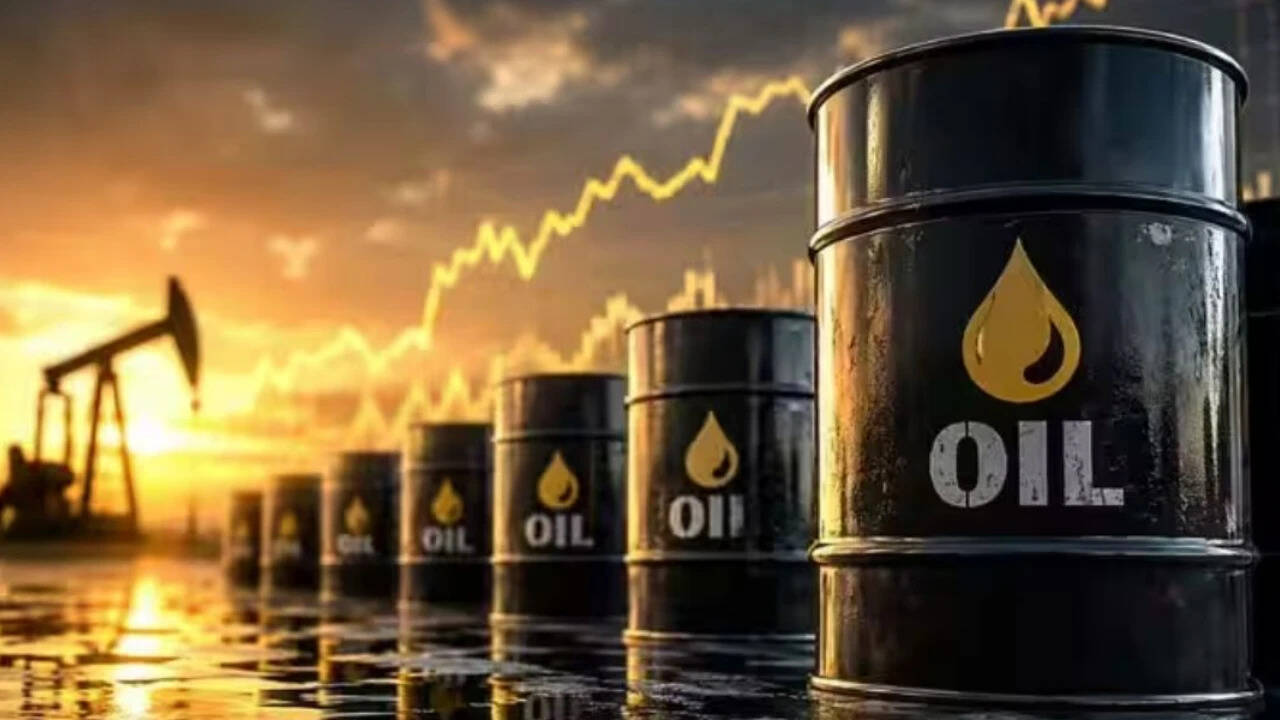
Every commodity desk in London and New York is currently suffering from a severe lack of imagination. The lazy consensus is deafening. Crude holds near one hundred and ten dollars a barrel, and the financial press is busy hyperventilating about geopolitical choke points, phantom supply shocks, and Middle Eastern barrel counts as if we are still living in the rigid energy architecture of nineteen seventy-three.
It is a comforting narrative for traders who want an easy excuse to mark up prices and collect fat commissions on volatility. It is also fundamentally wrong. For a different perspective, consider: this related article.
I have watched desks panic over headlines while ignoring the structural plumbing of modern global energy. We are pricing a twenty-first-century digitized economy using twentieth-century anxiety. The obsession with three-digit crude prices misses the quiet revolution happening beneath the surface of demand destruction, substitution velocity, and refining margin realities.
Let us dismantle the panic. Similar insight on the subject has been provided by MarketWatch.
The Geography of Fear Is Not the Geography of Flow
The headline always sounds terrifying. Tensions flare in the Middle East, tankers reroute, and pundits immediately dust off charts from previous decades to predict runaway energy inflation. They treat every barrel of oil as if it possesses a passport and zero alternatives.
This ignores how physical arbitrage actually works today.
When disruption hits a primary artery, the market does not simply sit down and die. It reroutes, it blends, and it substitutes with brutal efficiency. The current price floor near one hundred dollars relies on the assumption that global supply chains are brittle glass. In reality, they are shock-absorbing polymers. Shippers find alternative grades, arbitrage spreads widen to incentivize distant producers, and floating storage—often ignored by the daily news cycle—acts as an invisible shock absorber.
The market is paying a massive emotional tax on fear rather than a fundamental tax on scarcity.
The Demand Destruction Trap Everyone Ignores
Traders love to talk about sticky demand. They argue that consumers must drive, factories must produce, and airlines must fly regardless of cost. This is true in the very short term, but it masks the structural erosion happening at the margins.
When crude hovers at elevated levels for more than two quarters, a silent threshold is crossed. Fleet operators accelerate fleet electrification. Chemical manufacturers redesign feedstock recipes. Commercial logistics networks optimize routing algorithms to shave fractional percentages off fuel burn.
These are not headline-grabbing events. You will not see a breaking news alert about a logistics firm updating its routing software. Yet, the cumulative effect is a permanent haircut to baseline demand.
By the time the geopolitical noise clears and the supply fears prove overblown, producers find themselves staring at a hollowed-out demand base. The price spike plants the seeds of its own violent correction.
Refining Margins Tell the Real Story
If you want to know what crude is actually worth, stop looking at headline futures and look at product cracks.
Crude oil in a tank is useless. It must be cracked into gasoline, diesel, and jet fuel. When crude prices surge due to headline panic while product inventories remain stable or building, you are looking at a financial artifact, not a physical shortage. The current high price environment is heavily propped up by paper positioning—managed money chasing momentum because the trend is their friend until it breaks their legs.
Refiners are not screaming for physical barrels the way the paper market implies. Utilization rates tell a story of adequate supply meeting disciplined processing. The disconnect between paper swagger and physical reality has rarely been wider.
The Contrarian Playbook
If you are managing risk based on the idea that oil is locked in a permanent bull market driven by geopolitical doom, you are positioning for yesterday's war.
The smart capital is looking past the headline theater. It is betting on the resilience of non-OPEC production growth, the accelerating velocity of electrification in commercial transport, and the inevitable mean reversion when paper speculators get caught leaning the wrong way on a quiet Tuesday.
Stop buying the panic. The hundred-and-ten-dollar barrel is a ghost story told by people who forgot how to read a balance sheet.


